The Journey So Far
On November 30, 2022, OpenAI released ChatGPT to the public. In less than a week, it had over one million users. Within two months, over 100 million people were using it. This wasn't just another tech product launch. It was the moment artificial intelligence entered the mainstream conversation.
Since then, the AI trends of 2026 reflect unprecedented investment, rapid innovation, and a fundamental shift in how we think about technology's role in our lives. Major tech companies have invested hundreds of billions of dollars into AI infrastructure, research, and development. Governments worldwide are drafting AI policies. And individuals are grappling with a crucial question: What can AI do for me?
The Biggest AI Trends in 2026
Technology doesn't tend to evolve in a straight line. It follows S-curves. Each curve represents a technology moving from emergence, through rapid growth and adoption, to eventual maturity.
S-curves tend to look something like this. Slow at the beginning, rapid growth in the middle, and then leveling off as the technology matures:
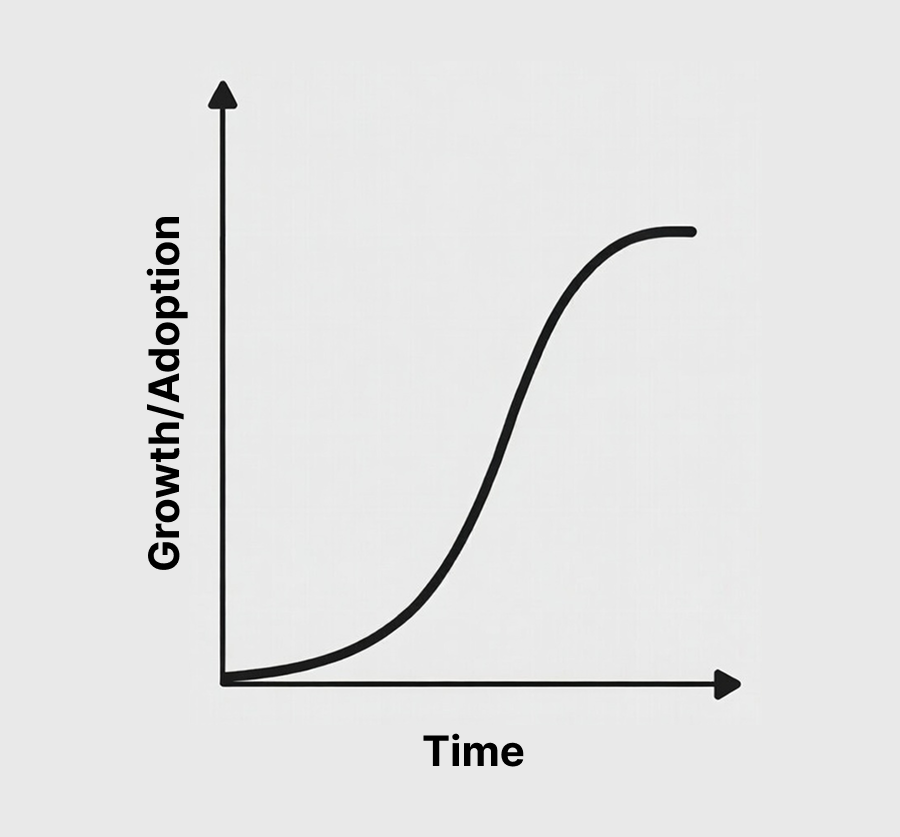
What makes AI uniquely transformative is that we're not riding just one S-curve. We're experiencing multiple overlapping waves of AI innovation, each building on the last.
Wave 1: Large Language Models & Chat Interfaces (Maturing)
This is the wave most people are familiar with. ChatGPT, Gemini, Claude, Grok, and other conversational AI systems have moved from experimental to essential. Today in January 2026, these tools are:
- Multimodal: They can process text, images, audio, and video
- Context-aware: They maintain longer conversations and understand nuance
- Specialized: Models fine-tuned for specific industries and use cases
- Accessible: Available through simple chat interfaces, applications, and API integrations
Where we are: The steep growth phase has begun to plateau for chat interfaces. The focus now is on refinement, reliability, and specialized applications rather than raw capability expansion (though large investments are continuing from the major providers).
What this means for you: If you're not using AI chat interfaces in your daily work, you're slowly falling behind. The question is no longer "Should I use AI?" but "How can I use it more effectively?" See our SMART framework guide on prompting for information on how to get more out of your AI chat sessions.
Wave 2: AI Agents (Early Acceleration)
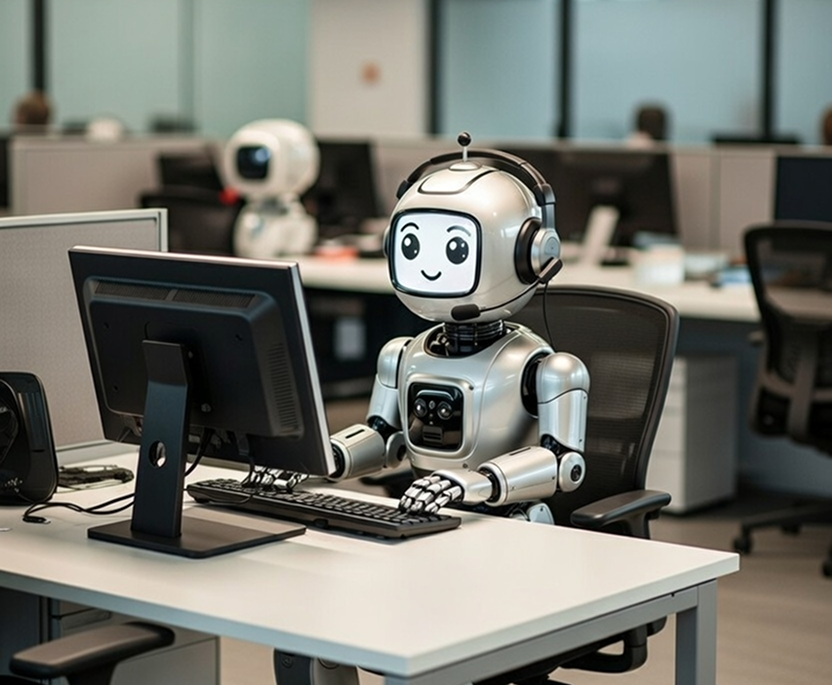
This is where things get really interesting. Classic chat bots are like a drop in the ocean compared to the potential that AI Agents offer. We're moving beyond AI as a conversational partner to AI as an autonomous worker. These agents can:
- Execute multi-step tasks without constant supervision
- Make decisions based on context and goals
- Interact with multiple tools and systems
- Learn from feedback and improve over time
Real-world examples in early 2026:
Claude Code: A development agent from Anthropic that can write, test, and debug code across entire repositories autonomously. It has exploded in popularity in early 2026, with software developers reporting immediate 10x productivity gains. It is widely considered the tool that proved agents could deliver real, production-quality work.
Claude Cowork: Branded as "Claude Code for the rest of your work." Cowork brings the same autonomous, agent-style workflow to non-developers. It can read your local files, create documents, synthesize research, organize folders, and execute multi-step tasks, all from a visual interface. If Claude Code proved agents could write software, Cowork is proving they can handle everyday knowledge work.
OpenClaw: Originally called Clawdbot, this open-source personal AI agent went viral in January 2026 for its ability to autonomously complete a wide variety of tasks while you sleep, amassing over 145,000 GitHub stars. OpenClaw runs directly on your operating system and integrates with 50+ services including Slack, WhatsApp, email, calendars, and smart home systems. Users have called it "the closest thing to JARVIS we've seen."
What's coming next: Google, OpenAI, Microsoft, Grok, and others are all racing to release their own general-purpose agent capabilities. Expect major announcements throughout 2026 as every major AI lab works to move beyond chat interfaces into autonomous agents that can operate across your entire computer.
Where we are: The beginning of the steep growth curve. Most agents today require some technical expertise to setup and have limited domains. But the trajectory is clear. Imagine an AI that can see your computer screen, use any application, access your files, and execute any task you could do manually. This is the ultimate AI assistant. Operating System-Level (Windows/Mac) agents are coming soon and will be able to navigate your computer autonomously, given the right permissions and prompts. Game changer.
What this means for you: The nature of knowledge work is changing fast. Tasks that once took hours can now be delegated to agents. They'll be able to work 24/7 on your behalf, given proper direction. The valuable skill is knowing how to direct, supervise, and leverage these agents effectively. You may be wondering how to get your hands on one of these agents today. AInalysis is here to help.
Wave 3: Physical AI & Humanoid Robotics (Just Beginning)
The final frontier is AI leaving the digital world and entering the physical one. Humanoid robots that can navigate human environments, manipulate objects, and perform physical tasks represent the ultimate expression of artificial intelligence.
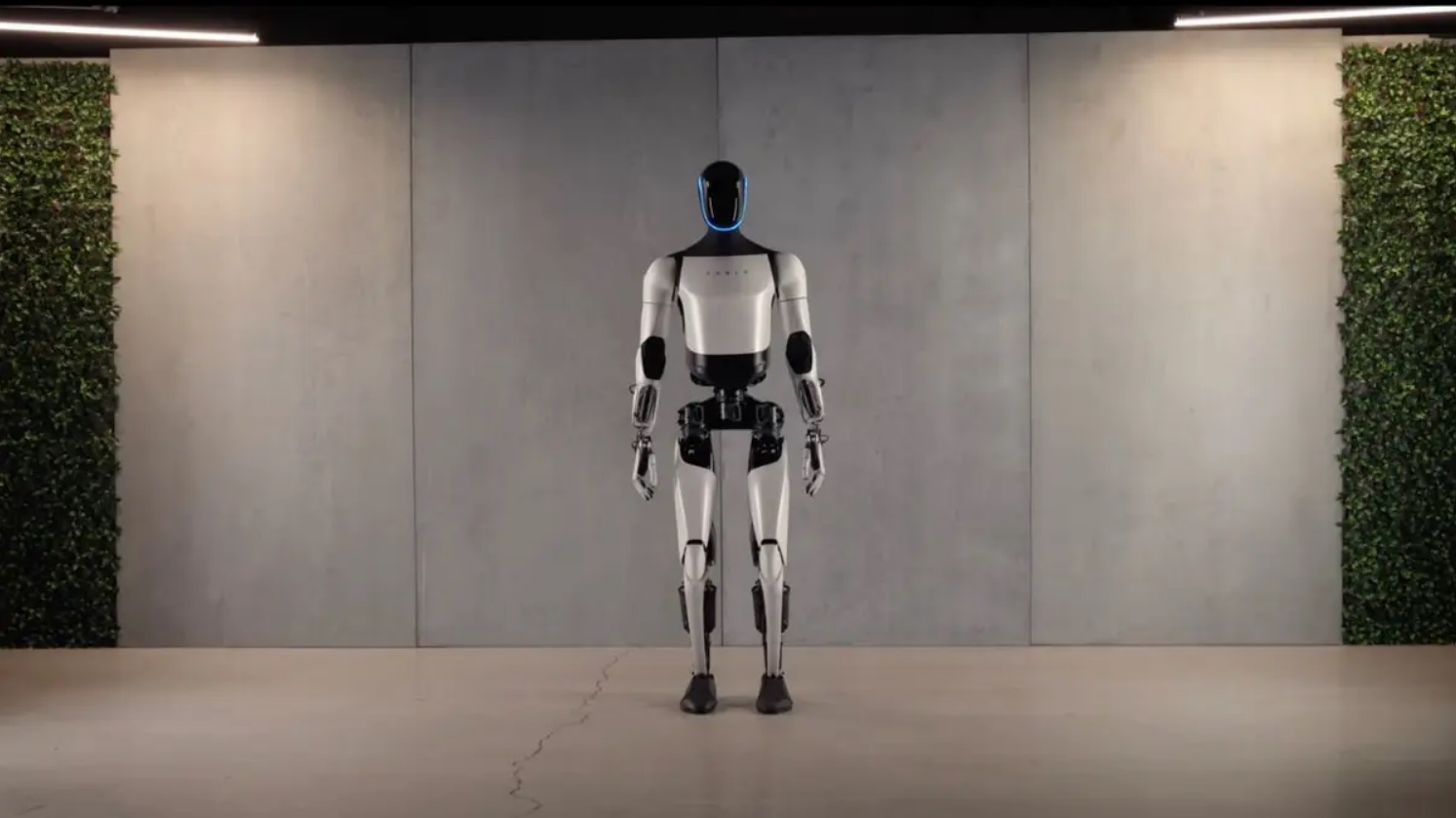
Current state in January 2026:
- Companies like Tesla (Optimus), Figure AI, Boston Dynamics, and others have working prototypes
- Early deployment in controlled environments like warehouses and manufacturing
- Rapidly improving dexterity, navigation, and task learning
- Costs still high, but dropping quickly
Where we are: The very beginning of the S-curve. Robotics is 5-10 years behind where LLMs were in 2022. But, the pace of innovation is accelerating. Expect significant breakthroughs in the next 2-3 years as real-world software models and physical robotics converge.
What this means for you: While physical AI might seem distant, its impact will be profound. Jobs involving physical manipulation and navigation will transform. New opportunities will emerge in robot supervision, maintenance, and training.
Where We Stand: The Critical Moment
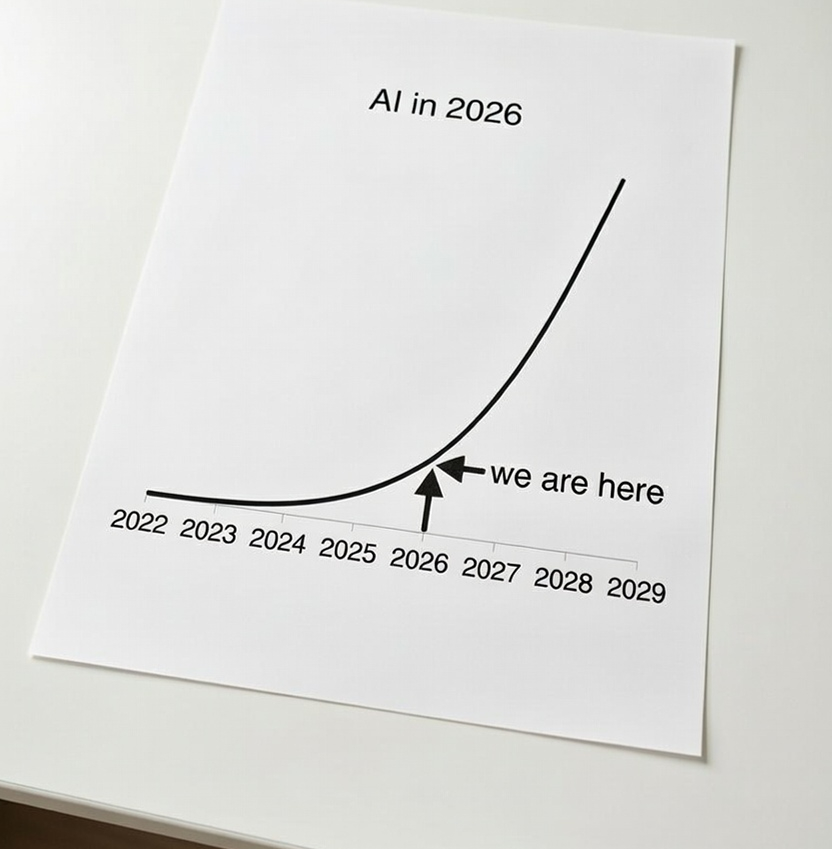
We are here: Solidly in the maturity phase of Wave 1 (chat bots), the acceleration phase of Wave 2 (AI agents), and the early emergence of Wave 3 (physical AI).
This is both exciting and daunting. We're past the point of wondering if AI will change everything. It already has. But we're still early enough that individuals who adapt now will have massive advantages over those who wait.
The Investment Landscape
The money flowing into AI is staggering and unprecedented:
- Big Tech: Microsoft, Google, Meta, Amazon, and others are each investing tens of billions annually
- Startups: AI companies raised over $100 billion in venture capital in 2025 alone
- Infrastructure: Hundreds of billions being spent on AI compute infrastructure (GPUs, data centers)
- Government: Major economies investing in AI research, development, and regulation
This isn't a bubble waiting to burst. This is a fundamental transformation of the technological foundation of modern civilization.
Why This Technology Matters More Than Any Before
Many claim AI is "the most important technology humans have created." Here's why they might be right:
- It's General: Unlike previous technologies that excelled at specific tasks, AI is increasingly capable across all cognitive domains
- It Scales Instantly: Once developed, AI capabilities can be deployed to billions of people immediately
- It Compounds: AI is being used to develop better AI, creating exponential improvement
The Labor Market Transformation (2026-2030 and Beyond)
Let's be direct: we believe that the 2026-2030 period will be the most disruptive period in labor market history. Here's what's already happening:
Jobs Being Transformed:
- Customer Service: AI agents handling 60-80% of inquiries in some cases
- Content Creation: AI assisting or fully generating written content, images, and soon full videos
- Software Development: Developers using AI to 10x their productivity
- Data Analysis: Routine analysis almost entirely automated
- Human Resources: AI agents automating resume screening, initial candidate outreach, interview scheduling, and onboarding processes
The Pattern: AI isn't necessarily eliminating jobs, but it's radically changing what humans do. The valuable human becomes the one who can direct AI effectively, handle edge cases, and apply judgment.
The IQ Leap: Albert Einstein, the gold standard for human genius, had an estimated IQ of approximately 160. As of early 2026, top-tier frontier models are already consistently scoring in the 140–150 range on standardized reasoning tests. We are currently standing on the doorstep of "human genius" as a baseline.
But here is the differentiator, Einstein was one man. AI is a utility. Imagine if, by next week, you could "summon" a million digital Einsteins to solve a single problem. This isn't just a productivity boost; it’s a phase shift in human capability. And unlike biological brains, AI doesn't have a physical ceiling. We are on a trajectory where AI IQ will likely move through 200, 500, and eventually 1,000+.
When you combine a super-genius mind with a robotic fleet that never sleeps, the traditional economy—which is built on the scarcity of labor and human expertise—essentially breaks.
How to Adapt: Practical Steps for 2026
1. Start Using AI Daily
If you're not using AI tools every single day, start now. Pick one task you do regularly and figure out how AI can help.
2. Learn Prompt Engineering
The ability to communicate effectively with AI is becoming as important as literacy. Take time to learn how to craft effective prompts. Check out our SMART Prompting Guide for a structured approach to AI interaction.
3. Understand Your Domain's AI Tools
Most professions now have AI tools available. Find them. Learn them. Master them.
4. Focus on Uniquely Human Skills
- Complex judgment in ambiguous situations
- Creative synthesis of disparate ideas
- Emotional intelligence and relationship building
- Strategic thinking and vision setting
5. Stay Informed
AI is evolving monthly. Follow developments. Experiment with new tools. The gap between those who keep up and those who don't is widening rapidly.
6. Think in Terms of AI Leverage
Stop thinking "How do I do this task?" Start thinking "How can AI help me do this task 10x faster or better?"
The Opportunity
Yes, AI is disruptive. Yes, it's changing everything. But here's the crucial insight:
We are still in the early stages of all of this.
The people who adapt now, in 2026, will have years of experience when the technology becomes truly mature. They'll understand how to work with AI agents. They'll have workflows optimized for OS-level AI. They'll be ready when physical AI arrives.
The question isn't whether AI will reshape your work and life. It will. The question is: Will you be ready?
Looking Ahead
By 2027-2028, we expect:
- AI agents handling complex multi-day projects autonomously
- Operating System-level AI becoming mainstream
- First widespread deployment of humanoid robots in commercial settings
- AI capabilities that today seem like science fiction becoming routine
The transformation is accelerating, not slowing down.
The future isn't something that happens to us. It's something we create. And right now, we have the opportunity to shape how AI integrates into our lives, our work, and our society.
The AI trends of 2026 point to one conclusion: The technology is here, it's powerful, it's accelerating, and the window to adapt is open. What will you do with this moment?
Further Reading: "Something Big Is Happening"
If the points in this article resonate with you, you're not alone. In February 2026, AI founder and investor Matt Shumer published a 5,000-word essay on X titled "Something Big Is Happening" that echoes many of the same themes we've covered here, and it struck a massive nerve. The post has surpassed 82 million views and sparked a global conversation.
Whether or not you agree with every point Shumer makes, the essay is a worthwhile read that reinforces the urgency of everything we've discussed. It's one of the most widely-read pieces on AI's near-term impact, and for good reason.
Shumer describes the moment that GPT-5.3 Codex and Claude Opus 4.6 dropped on the same day and something "clicked" for him. He compares the current AI moment to February 2020, when COVID was already spreading but most people hadn't yet grasped what was coming. His core message: the water is rising, and it's already at your chest.
His key arguments align closely with what we've outlined above:
- AI isn't improving incrementally anymore. It went from failing basic math (2022) to passing the bar exam (2023) to handling graduate-level work (2024). The trajectory is exponential.
- 50% of entry-level white-collar jobs could disappear within 1-5 years. Unlike past automation that targeted single skills, AI is improving across all cognitive domains simultaneously.
- AI is now building itself. OpenAI disclosed that GPT-5.3 helped create itself, a feedback loop researchers call an "intelligence explosion."
- The window to adapt is still open, but it's closing. Those who start seriously experimenting now will have a massive head start.